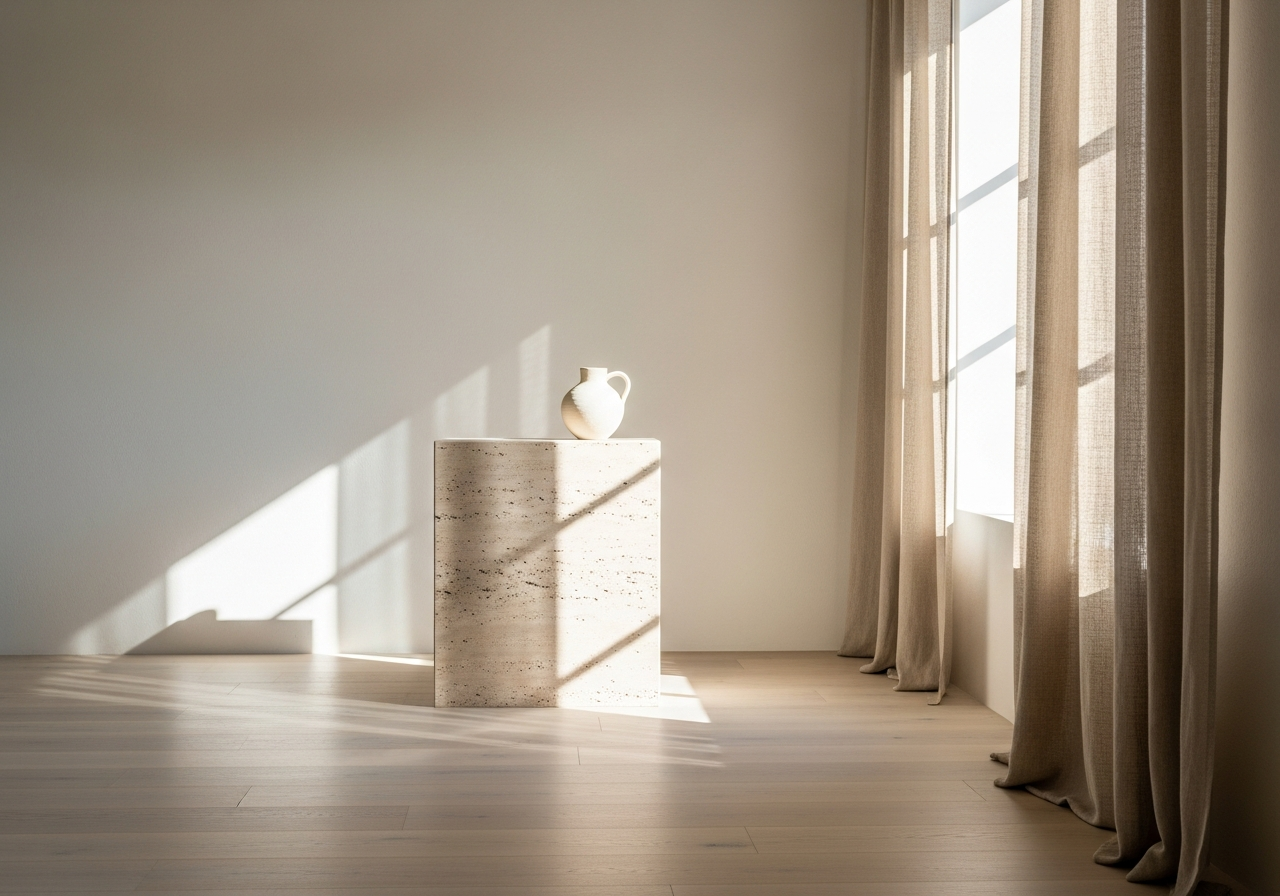
The Bright Shade
Whites
Light, made into a surface.
When to choose it
White is not a colour. It is what a room does with the light it is given. You choose the bright shade when you want the architecture to speak and everything in it to know its place. Nothing hides in a white room. That is the point of it.
The Anchor
A bright room only holds together around one heavy, honest object — stone, raw wood, something with weight. Without it, bright reads as empty rather than restrained.
The rules
Not preferences
01
White is nothing without shadow.
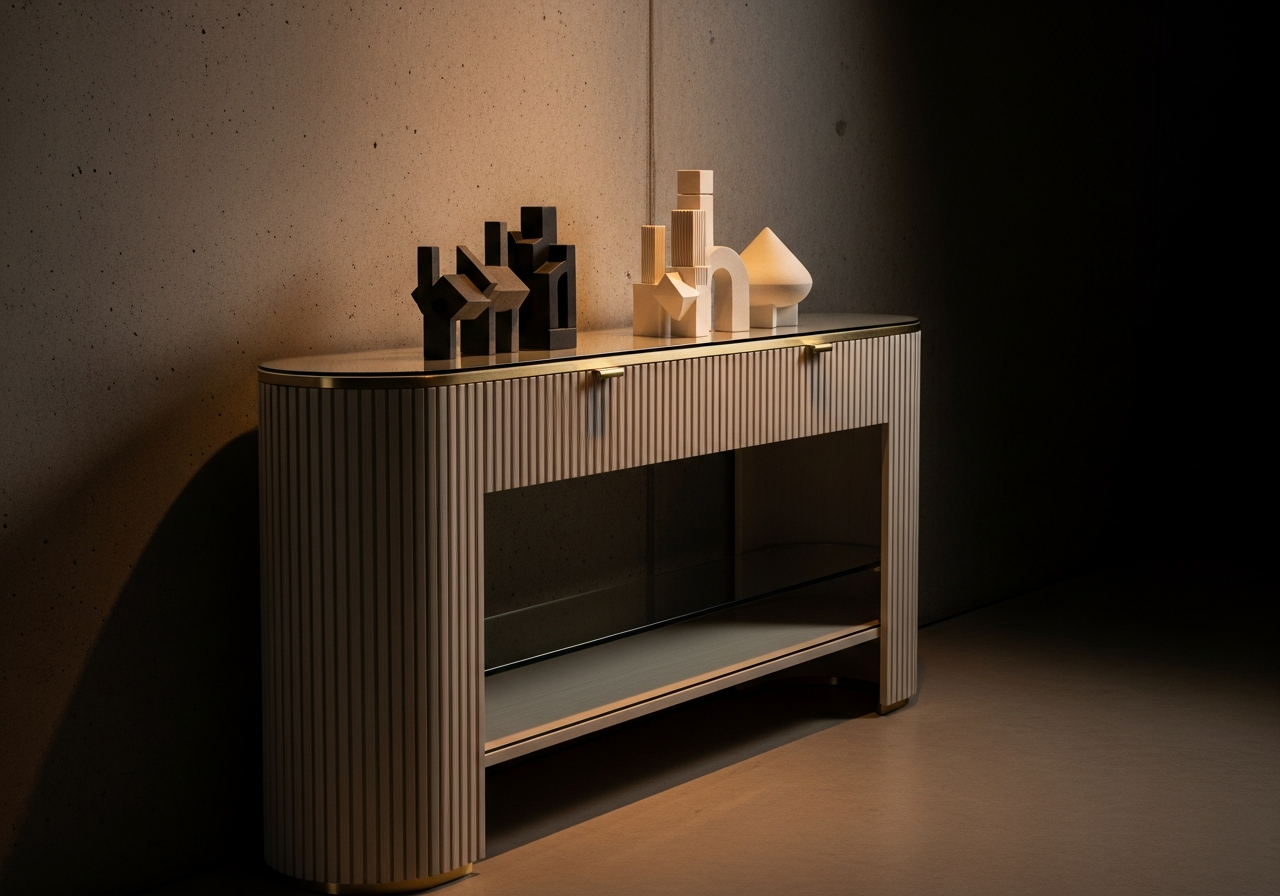
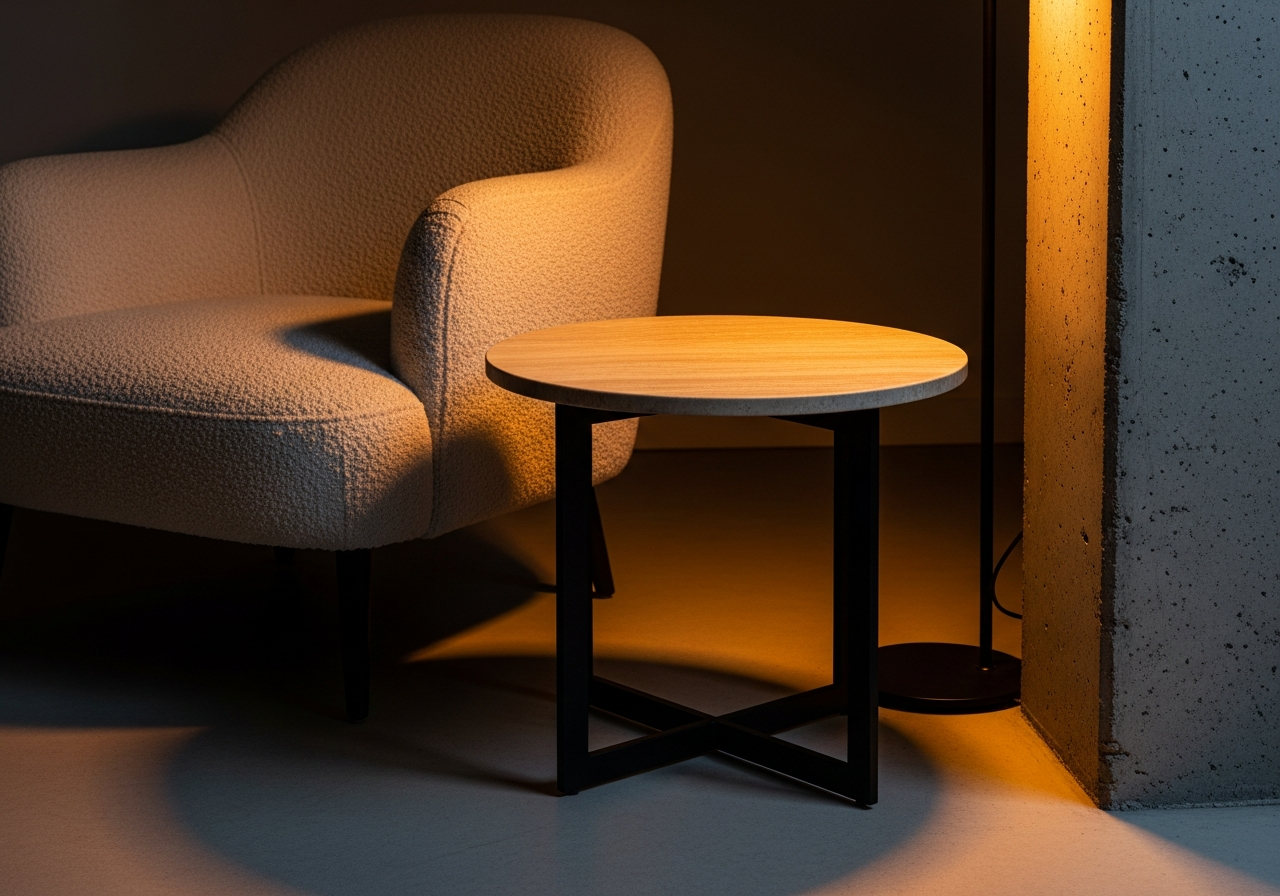
Set one deep tone against it — a blackened base, a charred edge. Brightness means nothing with nothing to push against.
02
Surface, never paint.
Limewash, bleached oak, honed travertine, raw linen. One shade, four materials. If the depth comes from a paint chip, you have already failed.
03
Light it low, light it raking.
A white room dies under flat overhead light. It lives in the angle of the sun. Design for that, or do not design at all.
04
Leave the surface bare.
In a white room the empty surface is the most expensive thing in it. Fill it and you cheapen the room.
The palette
Now it is your decision
What belongs in whites
Try It Yourself
Stand in the room in the morning. Watch where the shadows actually fall. Whatever's heaviest in that light is your anchor — not whatever's prettiest.
The other shades